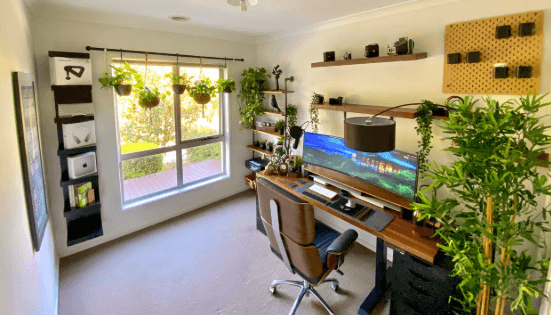
A coherent core shapes a productive home office, aligning monitor, keyboard, and mouse for neutral wrists and eyes while the desk height supports comfortable posture and an ergonomic chair anchors the space. From there, functional zones emerge for focused work, collaboration, and storage, with tools kept near tasks and adjacent shelves to cut search time. Cables quiet and under control, accessories streamlined, and flexible moves—under-desk trays, wireless options, movable screens—offer calm, then challenge you to refine the layout further.
Optimize Your Core Workstation Setup
Optimizing the core workstation starts with aligning essential components—computer, monitor, keyboard, and mouse—so they form a natural workflow with minimal reach. The setup emphasizes compact monitor placement, keyboard tray optimization, and ergonomic seating. Thoughtful cable management preserves space, while desk height adjustments and footrest positioning support posture. Clarity guides design, enabling freedom through precise, efficient, reusable workstation configuration.
Create Functional Zones for Flow and Storage
Creating functional zones for flow and storage begins by mapping how daily tasks move through the space, then allocating dedicated areas for work, collaboration, and easy access to supplies. The design emphasizes zone balance, ensuring paths remain clear while duties shift between focused work and shared activity. Storage adjacency reduces search time, keeping tools near tasks and encouraging intentional, seamless productivity.
Tidy Tech: Cables, Accessories, and Ergonomics
In any well-organized workspace, the trail of cords and the placement of peripherals shape both efficiency and comfort; a deliberate approach to cables and accessories reduces friction, supports posture, and clarifies work zones.
Tidy cables foster focus, while ergonomic accessories align with natural motion.
Two word discussion ideas about Subtopic not relevant to other H2s: freedom flow.
Small Space, Big Impact: Layouts and Flexibility
Small spaces demand intentional choreography: every inch must earn its keep, and flexible layouts provide the choreography that scales with needs. In compact environments, creative zoning matters: movable desks, folding walls, and multiuse surfaces cultivate open flow without clutter. Compact lighting and modular storage enable instant reconfiguration, sustaining a calm, productive atmosphere while preserving personal freedom and visual clarity.
Frequently Asked Questions
How Should I Choose a Desk Height for Long Writing Sessions?
The desk height ergonomics suggest alignment with forearms parallel to the floor and shoulders relaxed, supporting long writing sessions. He notes a chair-height tweak, foot support, and a flexible stance to honor personal rhythm and freedom.
What Lighting Setup Reduces Eye Strain During Work?
Glowing glare reduction guards eyes; softly sculpted lighting supports safe, steady sight. A thoughtful setup favors contrast enhancement, dimmable ambient plus task lamps, enabling desk ergonomics to flourish, freeing focus and fostering fearless, functional workspaces and steady gratification.
Which Plants Are Best for an Office Without Causing Allergies?
Certain office plants with low allergen risk include calming greens like philodendron and parlor palm, though personal sensitivities vary; opting for air purifying options such as peace lily or snake plant, with diligent care, minimizes allergy concerns.
How Can I Maximize Storage Without Sacrificing Floor Space?
To maximize storage without sacrificing floor space, the approach emphasizes vertical planning and modular design; organization tips highlight hidden compartments, wall-mounted systems, under-desks, and multi-purpose furniture, enabling freedom while maintaining a tidy, expansive workspace.
See also: Brain-Enhancing Technologies
What Are Budget-Friendly Ways to Soundproof a Home Office?
A hypothetical freelancer trialed budget friendly soundproofing, achieving noticeable quiet with DIY soundproofing methods like dense door sweeps and fabric wall panels. The result demonstrates practical, freedom-loving progress: accessible, cost-conscious, and effective for home office spaces.
Conclusion
In the grand theater of home offices, the core workstation commands the stage like a well-timed soliloquy: monitor, keyboard, and chair aligned for serenely neutral wrists, eyes, and ego. Zones pirouette for focus, collaboration, and storage, while cables perform a disciplined ballet of invisibility. Movable desks wink at flexibility; under-desk trays keep secrets; wireless whispers rule. The room exhales calm productivity, and the user pretends not to notice how the clutter was merely foiled by a clever ergonomic plot twist.