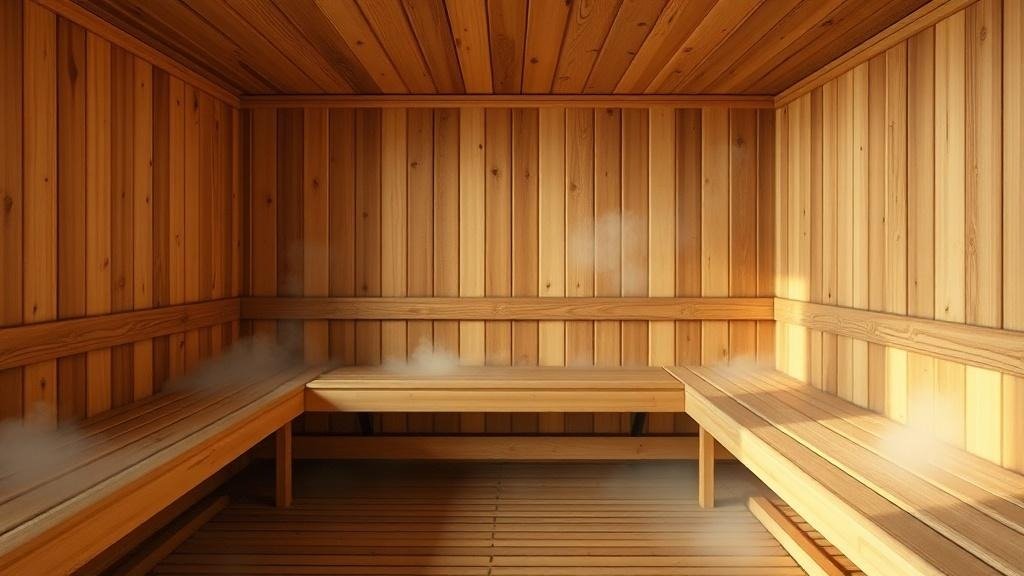
The right way to judge outdoor sauna complete guide is by how it will feel, fit, and hold up after the first month. Heat performance, electrical planning, materials, maintenance, and actual user habits matter more than showroom language.
Last February, my neighbor Dave in Boise dropped $7,400 on a four-person barrel sauna, had it craned over his fence, and invited his family of four in for the inaugural session. His wife sat cross-legged on the upper bench. His fourteen-year-old sprawled across the lower one like it was a couch. His twelve-year-old wedged in beside Dave, who spent twenty minutes with his knees pressed against the heater guard. “It felt like a hot phone booth,” Dave told me over the fence the next morning. “Seven grand for a phone booth.”
I laughed. Then I made the exact same mistake.
The Brochure Capacity Is a Lie
Sauna capacity ratings are measured the way airlines measure legroom: technically true, functionally absurd. The spec assumes four adults sitting bolt upright, knees together, arms tucked, like strangers on a rush-hour subway car.
Nobody uses a sauna like that.
In practice, people lean. They stretch. Somebody wants to lie down. Somebody else is doing breath work with their legs crossed. A teenager is hogging a corner with a towel draped over their face like a Victorian fainting scene.
A “four-person” sauna comfortably fits two adults plus one occasional extra. Three adults if everyone is on the smaller side. Four adults only if you genuinely enjoy physical contact with your family members in 190-degree heat.
Forget Capacity. Count Bench Inches.
The number that actually matters is bench length, not the number printed on the box.
Each adult needs roughly twenty inches of bench width to sit without touching shoulders. To lie down on an upper bench, you need at least six feet of uninterrupted length.
A typical four-person cabin sauna has two benches running five and a half to six feet long. That accommodates two and a half adults sitting per bench, or one adult lying down per bench, or one sitting with one stretching out. Not terrible. But it’s not “four people lounging after a cold plunge.”
A six-person sauna typically runs six and a half to seven feet per bench. That’s enough for two adults lying down on the upper tier, or three sitting per bench. The difference on paper looks incremental. In practice, it’s the difference between a sauna you use daily and one that becomes a storage shed.
How My Family Burned Through a Four-Person in Eleven Months
I started with the four-person model. Roughly seventy-five hundred dollars including delivery and a small concrete pad.
First two months: the kids and I used it together a few evenings a week. Tight but tolerable.
Month four: my daughter became a daily user and wanted to bring friends over. Three teenagers in a four-person sauna works fine. Three teenagers plus me trying to squeeze in does not.
Month eight: my wife and I had settled into a routine of twenty-minute sessions together most evenings. Two adults plus the occasional kid dropping in was the daily reality. The four-person handled that, but barely.
Month eleven: I traded it in and ordered the six-person. The difference was immediate and dramatic. All four of us fit with room to spare. Friends fit. Nobody bumps elbows. Nobody’s foot is near someone else’s face.
The catch is I could have saved myself a year of frustration and the resale hit by just buying the bigger one first.
A Simple Sizing Framework
Think about how you’ll actually use the thing, not how you think you’ll use it.
Solo or couples use, kids occasionally on their own: A three or four-person sauna is fine. You’re never all in there at the same time.
Family activity, two or more people daily: Size up. Six-person minimum.
You entertain, or teenagers will bring friends: Size up again. Eight-person if you have the space.
The cost difference between four and six-person is usually two to three thousand dollars. That’s real money, but weighed against a decade of daily family use, it’s a rounding error.
The Heat Stratification Trick Nobody Mentions
Here’s the thing about sauna heat: it stratifies dramatically. The upper bench at 195 degrees might sit above a lower bench at 150. That’s a normal twenty to forty-degree gradient, and for families it’s actually a feature, not a flaw.
Kids and heat-sensitive members sit lower. Heat-tolerant adults climb higher. Everyone gets the intensity they want without arguing over the thermostat. (Sound familiar? It’s the sauna version of the household thermostat war, except everyone wins.)
But you need real bench height separation for this to work. Many small saunas have a single bench level or two tiers crammed so close together you can’t sit upright on the lower one. Look for two-tier seating with at least eighteen inches of height difference between tiers.
See also: Brain-Enhancing Technologies
Ventilation Will Make or Break Family Sessions
Four bodies breathing in a sealed wooden box drops oxygen faster than the marketing materials assume. I learned this the hard way. My first sauna started feeling stuffy with three of us inside after fifteen minutes. Headachy. Heavy. Not the relaxing family ritual I had in mind.
Look for an intake vent near the floor, positioned under or behind the heater, and an exhaust vent high on the opposite wall. Both should be adjustable. Most cheap saunas ship with a single fixed vent that doesn’t move enough air for multi-person use.
The upgraded model has proper cross-ventilation, and we’ve done forty-five-minute family sessions with four people, no stuffiness, no complaints.
Getting the Heater Right the First Time
For a six-person cabin sauna, plan on an 8kW electric heater minimum. 9kW is better if you’re in a cold climate or your sauna sits exposed to wind.
A 6kW heater rated for that size “on paper” will struggle to maintain temperature once you add four warm bodies, a door that opens every ten minutes when someone grabs water, and cold ambient air flooding in each time.
Wood-burning heaters scale differently. A twenty-kilogram capacity wood stove handles a six-person sauna without issue, and frankly provides a better experience if you enjoy the ritual of building a fire. But that’s a different conversation.
Either way, electric installations require a licensed electrician for the 240V dedicated circuit. Don’t try to DIY this. Permits matter. The inspection process exists for a reason. I’ve seen forum posts from guys who wired their own and tripped breakers for months before calling a pro anyway. Pay once, do it right.
Door Size and the Constant Traffic Problem
A narrow door is fine if one person enters, sits for thirty minutes, and leaves. With a family, you’ll have constant traffic. Kids leave to grab water. Someone needs the bathroom. Someone wants to do a cold plunge mid-session.
Look for a full-height door at least twenty inches wide. Glass panels help with visibility (and honestly make the sauna look better from outside, which matters if it’s in your backyard). A door that swings outward is non-negotiable for safety.
How to Shop Without Getting Sold
My strongest opinion on this topic: if a sauna brand won’t publish actual dimensions on their website, walk away.
You need length, width, ceiling height, bench length per row, bench depth, and door size. Not just “seats six.” The number of brands that hide behind vague capacity ratings while charging premium prices is staggering.
Visit a showroom if there’s one within driving distance. Sit in the size you’re considering for ten minutes. Have your biggest family member sit in it. Have two of you sit in it together. You’ll know in about ninety seconds whether it’s big enough.
Call the company. Ask them which model they’d recommend for a family of four who plans to use it together. The good companies will steer you toward the six-person model even though it’s more expensive. The bad ones will sell you whatever you ask for.
Brands like https://sweatdecks.com/blogs/news/outdoor-sauna-complete-guide/blogs/news/outdoor-sauna-complete-guide/blogs/news/outdoor-sauna-complete-guide/blogs/news/outdoor-sauna-complete-guide/blogs/news/outdoor-sauna-complete-guide publish all their dimensions clearly and will have a real conversation about sizing on the phone. That’s the minimum standard I’d hold any company to.
The HSA/FSA Question
A lot of families ask whether a sauna purchase can run through health spending accounts. The answer depends entirely on documentation.
If you have a letter of medical necessity from a physician for a specific condition (cardiovascular issues, chronic pain, certain dermatological conditions), some sauna purchases can qualify for HSA/FSA reimbursement through services like TrueMed. But eligibility is specific and conditional. Don’t assume yours qualifies. Talk to your accountant or the reimbursement platform before building a budget around it.
What I’d Tell Myself a Year Ago
Buy the size up. The price gap between four and six-person is small relative to a decade of daily family use. The smaller sauna is a constraint you’ll hit every single time you wish you’d gone bigger, and you’ll wish it more often than you think.
Plan for the heater upgrade from the start. Pay the licensed electrician once.
And measure the path from your back door to where the sauna will sit. Kids walking barefoot in winter need a clear, short path with non-slip surface. We added a heated mat for the last six feet, and it’s been worth every dollar. It’s the kind of detail nobody thinks about until the first night someone slips on frozen pavers in flip-flops at 9 PM.
FAQs
What size sauna do I actually need for a family of four? A six-person sauna is the realistic minimum for a family of four who plans to use it together regularly. A four-person model works if only two people are in it at a time.
How much bench space does each person need in a sauna? About twenty inches of width per person for seated use. At least six feet of uninterrupted bench length if someone wants to lie down.
What size heater do I need for a family sauna? For a six-person cabin sauna, an 8kW electric heater is the minimum. 9kW is better for cold climates or if the door opens frequently during family sessions.
Does bench height matter in a family sauna? Yes. Heat stratifies significantly, with upper benches running twenty to forty degrees hotter than lower ones. Two-tier seating with at least eighteen inches of height difference lets family members choose their preferred intensity.
Can I use HSA or FSA funds to buy a sauna? Possibly, if you have a letter of medical necessity from a physician for a qualifying condition. Consult your accountant or a reimbursement platform like TrueMed before assuming eligibility.
How important is ventilation in a family sauna? Critical. Multiple bodies consume oxygen quickly. Look for adjustable intake and exhaust vents on opposite walls. Single fixed vents common in budget saunas often aren’t sufficient for family-sized sessions.
What’s the cost difference between a four-person and six-person sauna? Typically two to three thousand dollars, depending on brand and features. Given the significant improvement in usability, the upgrade pays for itself in daily comfort over years of use.